
Seven Wonders of the Ancient World
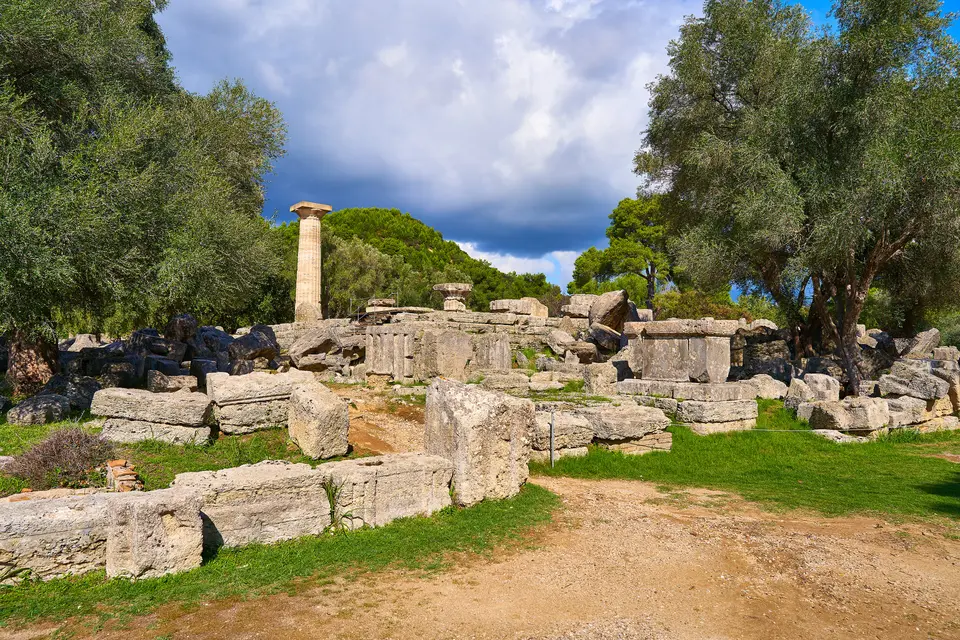
The statue of Zeus at Olympia was made by the sculptor Pheidias around 435 BCE for the great Doric temple of Zeus, completed some twenty years earlier. Ancient writers describe a seated god about twelve metres tall, with a body of ivory and robes of gold on a wooden core, holding a figure of Victory in one hand and a sceptre in the other, on a throne of cedar, ebony, ivory and gems. It sat in a temple that was itself a landmark of classical architecture, in a sanctuary where the Olympic Games were held every four years from the eighth century BCE. The statue was repaired and visited for centuries. It was probably removed to Constantinople in late antiquity, and sources suggest it was destroyed in a fire in the fifth century CE. Nothing of it survives. Excavations at Olympia uncovered Pheidias’s workshop, later converted into a church, and a small cup bearing the inscription “I belong to Pheidias”, a poignant link to the sculptor. Visitors can walk the sanctuary of Olympia, a UNESCO World Heritage Site, passing the foundations and tumbled drums of the Temple of Zeus, the stadium, the workshop and the Temple of Hera where the Olympic flame is lit. The Archaeological Museum displays sculpture from the temple’s pediments and metopes, which convey the original grandeur. Visiting in spring or autumn gives pleasant light among pine and olive trees.
How to visit
Statue lost; temple in ruins. Only foundations, fallen columns and a few re-erected pieces of the temple remain.
- Gateway
- Athens (ATH) or Patras; the nearest town is Archaia Olympia, near Pyrgos. Olympia is a long day trip from Athens; an overnight stay is rewarding.
- Getting there
- By car, bus or train and bus from Athens or Patras to Pyrgos and then to Archaia Olympia; allow several hours. Confirm schedules before travelling.
- Access and booking
- A combined ticket covers the archaeological site, the Archaeological Museum and the Museum of the History of the Excavations; online tickets are available through the Greek Ministry of Culture’s e-ticketing system.
- Season and conditions
- Spring and autumn are best; summer is very hot, so visit early or late.
- Guides, permits and reservations
- No permit. Pets are not allowed; check seasonal hours and closure days.
- Accessibility and physical demands
- Paths are uneven; the museum is better suited to visitors with limited mobility. Details pending verification.
- What you can realistically visit today
- You can walk the sanctuary, see the Temple of Zeus’s ruins, the workshop of Pheidias and the stadium, and visit the museum for temple sculptures.
Checked against official sources
- The Ministry of Culture lists a combined ticket for the site, the Archaeological Museum and the Museum of the History of the Excavations, with online sales through hhticket.gr, summer hours daily 08:00–20:00 from 1 April 2026, and closure on certain public holidays; winter hours differed between sources. — Greek Ministry of Culture (odysseus / hhticket)
Reviewed 2026-10-23. Official details change; confirm on the official page before you travel.
Pending verification
SATRAM has not verified the following; please check an official source:
- Winter opening hours (sources differ) and current ticket prices.
- Transport timetables from Athens or Patras.
Official and useful links
Sources
Description and visit notes were written by SATRAM from these references. “Opened” means a page was read during the review; “cited” means it is listed as a standard reference and its address has not been machine-checked. Last reviewed .
- Archaeological Site of Olympia — UNESCO World Heritage List — UNESCO World Heritage Centre · cited
- Online tickets for archaeological sites — Olympia — Hellenic Ministry of Culture · opened
- Statue of Zeus at Olympia — Encyclopaedia Britannica · cited