
Seven Wonders of the Ancient World
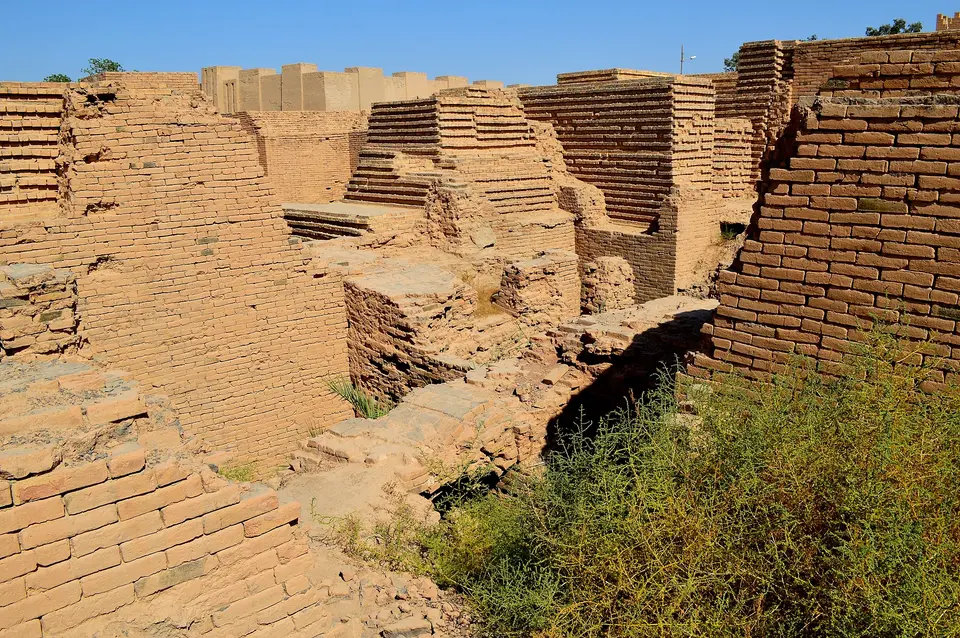
The Hanging Gardens are the most elusive of the ancient wonders. Greek and Roman writers describe a stepped garden of trees and flowers rising on terraces, watered by ingenious machinery, and attribute it to the Babylonian king Nebuchadnezzar II around 600 BCE, supposedly built to comfort a wife homesick for greener lands. Yet no Babylonian text mentions such a garden, and the classical authors wrote centuries after Babylon’s peak, relying on earlier accounts that are now lost. Archaeologists have not found definitive remains. Robert Koldewey, who excavated Babylon in the early twentieth century, proposed a vaulted structure near the palace as a candidate, but that identification is widely doubted. Some scholars suggest the gardens may have belonged to the Assyrian capital Nineveh, near modern Mosul, where Sennacherib created lavish gardens and water systems; others think the descriptions mingle several real parks with legend. The honest summary is that we do not know where the gardens were or whether they existed as described. What visitors can see is Babylon itself, a vast archaeological site inscribed on the UNESCO World Heritage List in 2019, with excavated brick walls, processional ways and partial reconstructions from the twentieth century. The famous blue-glazed Ishtar Gate was carried to Berlin, where it is exhibited in the Pergamon Museum, and a replica stands at the site. A photograph of Babylon is not a photograph of the gardens.
How to visit
Location and existence debated. No confirmed remains. Babylon’s ruins are real and can be visited.
- Gateway
- Baghdad (BGW), roughly 85 km north of Babylon. Security and entry conditions differ greatly by nationality; check official travel advice first.
- Getting there
- Babylon lies near the city of Hillah in Babil Governorate, about 85 km south of Baghdad, and is normally reached by road with a licensed local guide or arranged transport.
- Access and booking
- Entry arrangements, tickets and opening hours are set by Iraq’s State Board of Antiquities and Heritage and were not verified for this profile.
- Season and conditions
- Spring and autumn are more comfortable; summers are extremely hot.
- Guides, permits and reservations
- Check your government’s current travel advice for Iraq before planning; many governments advise against all or most travel to parts of the country. A visa or entry permission may be required depending on nationality.
- Accessibility and physical demands
- Pending verification; the site is large, partly reconstructed and exposed to sun.
- What you can realistically visit today
- You can visit the archaeological site of Babylon, including partial reconstructions of the palace and processional way. The Ishtar Gate itself is in the Pergamon Museum in Berlin (check its exhibition status, as major renovation affects displays).
Checked against official sources
- UNESCO documentation reports Babylon is in Babil Governorate, is part of the municipality of Hillah, was inscribed in 2019, and that around 85 percent of the property remains unexcavated; its 2025 conservation report notes a rehabilitated information centre. — UNESCO World Heritage Centre (state of conservation)
Reviewed 2026-10-23. Official details change; confirm on the official page before you travel.
Pending verification
SATRAM has not verified the following; please check an official source:
- Opening hours, tickets and access arrangements at Babylon.
- Current security conditions and entry rules (consult your government’s travel advice).
- Display status of the Ishtar Gate at the Pergamon Museum.
Official and useful links
Sources
Description and visit notes were written by SATRAM from these references. “Opened” means a page was read during the review; “cited” means it is listed as a standard reference and its address has not been machine-checked. Last reviewed .
- Babylon — UNESCO State of Conservation 2025 — UNESCO World Heritage Centre · opened
- Hanging Gardens of Babylon — Encyclopaedia Britannica · cited
- Seven Wonders of the World — Encyclopaedia Britannica · cited
- UK Foreign Travel Advice — Iraq — UK FCDO · cited