
Seven Wonders of the Industrial World
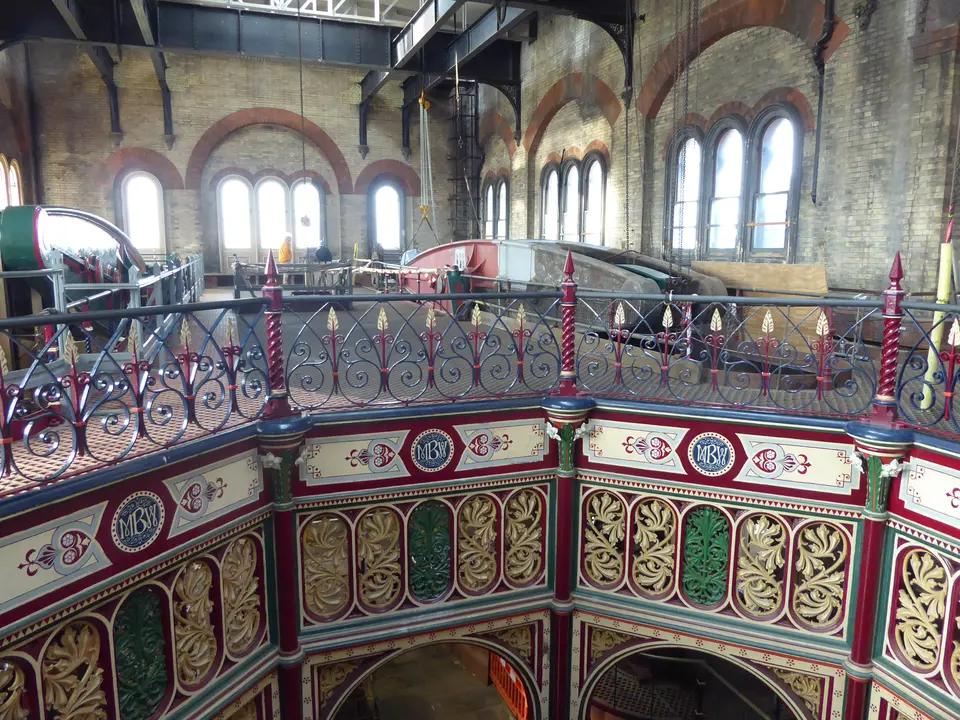
In the summer of 1858 the stench of the Thames, fouled by untreated sewage, became so severe that Parliament was forced to act, an event remembered as the Great Stink. Cholera outbreaks had already killed thousands, though the link with contaminated water was only gradually understood. The Metropolitan Board of Works appointed its chief engineer, Joseph Bazalgette, to design a system that would intercept sewage before it reached the river and carry it eastwards by gravity and pumping to outfalls downstream. Between about 1859 and 1875, his teams built some 132 kilometres of main brick sewers and linked them to many more kilometres of local sewers, using hundreds of millions of bricks. Great pumping stations, including Abbey Mills, Crossness, Deptford and Western, lifted sewage between levels, powered by steam beam engines. Bazalgette also combined the sewers with new embankments along the Thames at Victoria, Albert and Chelsea, creating roads, gardens and underground railway space above them. The system was so well planned that it still forms the backbone of London’s sewerage today, supplemented in recent years by the Thames Tideway Tunnel. Most of it is hidden and not open to visitors, but Crossness Pumping Station, a lavish Victorian engine house with restored engines, welcomes the public on selected days, and Abbey Mills can be admired from outside. Walking the embankments is the easiest way to feel the scale of the vision.
How to visit
Operational infrastructure; some heritage sites open. Sewers are closed; selected pumping-station visits.
- Gateway
- London (LHR / LCY). Crossness Pumping Station is in south-east London; visits are on selected days.
- Getting there
- Crossness Pumping Station (Bazalgette Way, SE2) is reached by road and local transport; the Crossness Engines Trust offers a vintage bus on special days. Abbey Mills is viewed from Three Mills Green in east London.
- Access and booking
- Crossness is open to the public on selected dates for steaming days, guided tours and group visits; booking is through its website.
- Season and conditions
- Open days are scheduled through the year; check the calendar.
- Guides, permits and reservations
- Book in advance for tours; sewers and pumping stations other than open-day venues are not accessible.
- Accessibility and physical demands
- The Trust publishes an accessibility page; details pending verification.
- What you can realistically visit today
- You can visit Crossness’s engine house on open days, walk the Thames embankments and look at Abbey Mills from outside.
Checked against official sources
- The Crossness Engines Trust describes the site as open to the public on selected dates, with steaming days, guided tours and group tours, the address as Bazalgette Way, London SE2 9AQ, and a free vintage bus on its Christmas Steaming Day on Sunday 6 December 2026. — Crossness Engines Trust
Reviewed 2026-10-23. Official details change; confirm on the official page before you travel.
Pending verification
SATRAM has not verified the following; please check an official source:
- Ticket prices, accessibility arrangements and public-transport directions.
- Status and visiting arrangements of the Thames Tideway Tunnel.
Official and useful links
Sources
Description and visit notes were written by SATRAM from these references. “Opened” means a page was read during the review; “cited” means it is listed as a standard reference and its address has not been machine-checked. Last reviewed .
- Seven Wonders of the Industrial World (BBC series) — Wikipedia · opened
- Crossness Engines Trust — Crossness Engines Trust · opened
- Joseph Bazalgette — Encyclopaedia Britannica · cited