
Seven Wonders of the Industrial World
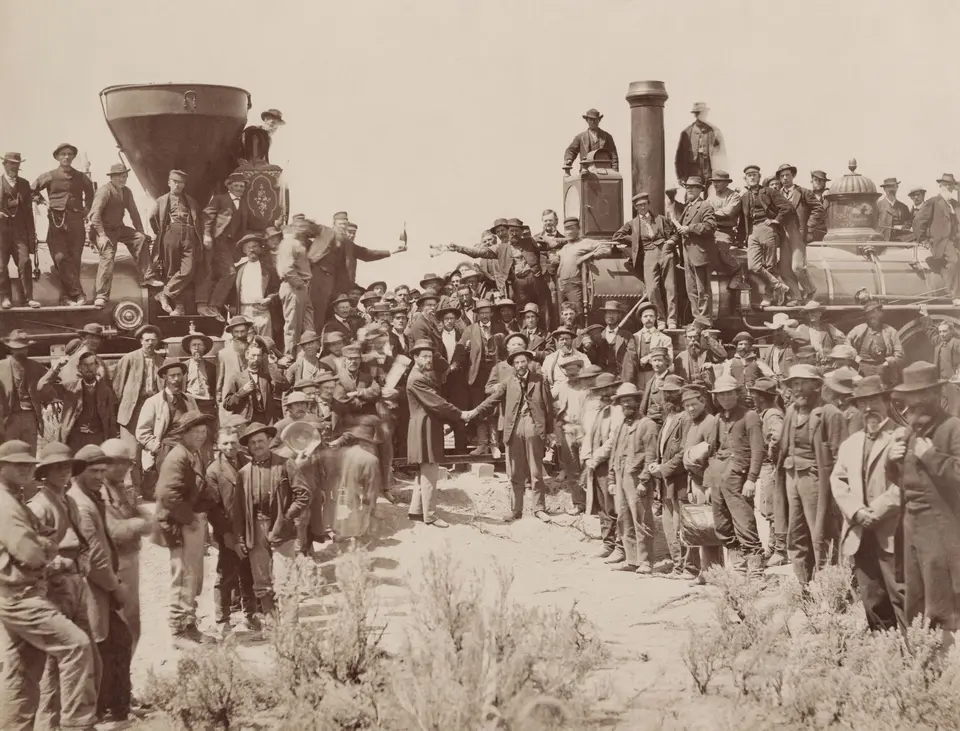
The First Transcontinental Railroad was completed on 10 May 1869 when the Central Pacific and Union Pacific lines met at Promontory Summit in the Utah Territory, creating the first continuous rail route across the United States. Authorised by Pacific Railroad Acts passed during the Civil War, it was built by two competing companies: the Central Pacific working east from Sacramento over the Sierra Nevada with a workforce that included thousands of Chinese labourers, and the Union Pacific working west from the Missouri River across the plains with Irish immigrants, army veterans and others. The work was dangerous, through blizzards and deserts, with tunnelling in granite and conflict with Indigenous nations whose lands were affected. The final ceremony, with a ceremonial golden spike and a telegraph message announcing the news, was photographed in famous images that mostly excluded the Chinese workers. The railroad cut travel across the continent from months to about a week and reshaped settlement, trade, warfare and the environment, bringing opportunity to many and dispossession and harm to others. Today the Golden Spike National Historical Park preserves the meeting place, with a visitor centre, trails along the original grade, and working replicas of the locomotives Jupiter and No. 119 that operate on certain days, while the California State Railroad Museum in Sacramento tells the Central Pacific side. The park is open outdoors from sunrise to sunset, and its remote location, expansive sky and wind give a feel for the scale of the achievement.
How to visit
Historic route; Promontory site preserved. The original rails were removed from Promontory; the site is a national historical park with replica locomotives.
- Gateway
- Salt Lake City (SLC) for Golden Spike National Historical Park, Utah. The park is in remote country north-west of Brigham City; plan to drive.
- Getting there
- From Salt Lake City, drive north via Brigham City to Promontory; there is no public transport to the park.
- Access and booking
- Golden Spike National Historical Park is run by the National Park Service; outdoor features are open from sunrise to sunset. Visitor centre hours and fees are on the NPS site.
- Season and conditions
- Summer is the main season for locomotive demonstrations; winters are cold and windy.
- Guides, permits and reservations
- None beyond park fees and rules.
- Accessibility and physical demands
- NPS publishes accessibility information; pending verification for this park.
- What you can realistically visit today
- You can visit the visitor centre, walk the grade, and, on scheduled days, watch steam locomotive replicas; also visit railway museums in Sacramento or Omaha.
Checked against official sources
- The National Park Service page states that outdoor features at Golden Spike National Historical Park are open seven days a week from sunrise to sunset, and the summer page describes the historic locomotives operating daily in season; it gives a mailing address in Brigham City, Utah. — National Park Service
Reviewed 2026-10-23. Official details change; confirm on the official page before you travel.
Pending verification
SATRAM has not verified the following; please check an official source:
- Entrance fees, visitor centre hours and locomotive demonstration schedules for your date.
- Accessibility details.
Official and useful links
Sources
Description and visit notes were written by SATRAM from these references. “Opened” means a page was read during the review; “cited” means it is listed as a standard reference and its address has not been machine-checked. Last reviewed .
- Seven Wonders of the Industrial World (BBC series) — Wikipedia · opened
- Golden Spike National Historical Park — plan your visit — National Park Service · opened
- First transcontinental railroad — Encyclopaedia Britannica · cited