
New 7 Wonders Cities
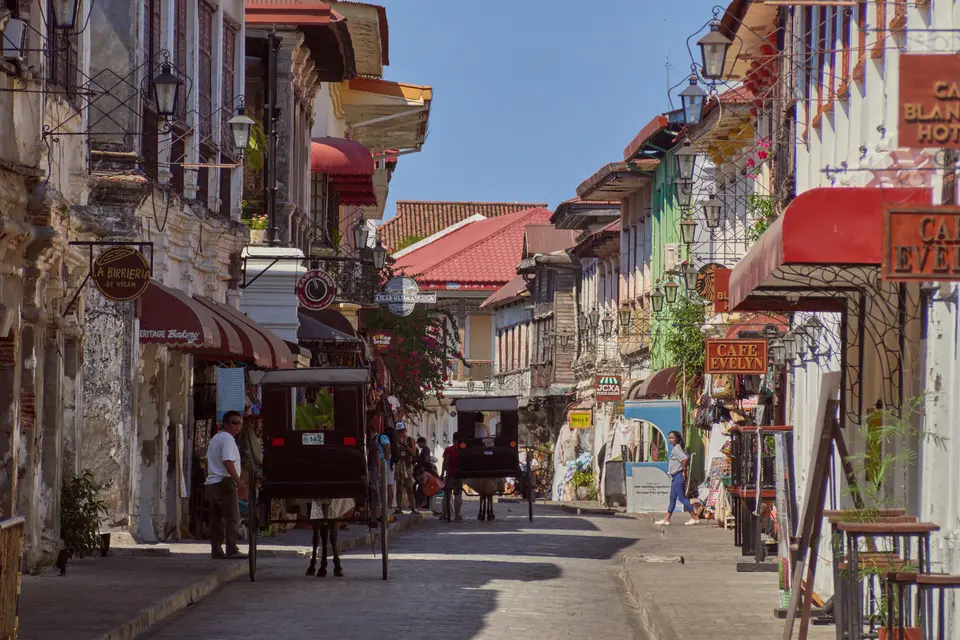
Vigan is one of the best-preserved Spanish colonial towns in Asia, founded in the sixteenth century at the mouth of the Mestizo River. Its centre follows a grid typical of Spanish planning, with a plaza, cathedral and government buildings, yet its houses are a blend of Philippine, Chinese and European styles. These ancestral homes have thick lower walls of brick and stone, upper storeys of wood, sliding windows made of capiz shell and tiled roofs, shaped by the climate and the threat of earthquakes. UNESCO inscribed the Historic Town of Vigan in 1999. The best-known street is Calle Crisologo, a cobbled lane closed to most vehicles where horse-drawn kalesas clatter past shops selling woven fabrics, burnay pottery and Ilocano delicacies such as longganisa sausage and empanada. Evenings bring lantern light and a calm that many travellers find atmospheric. Beyond the heritage zone, Vigan connects with the wider Ilocos region, where windswept dunes, centuries-old churches and rice terraces lie within day trips. Heritage conservation involves residents, businesses and the city government, and balancing tourism with daily life is an ongoing challenge, so staying in ancestral guesthouses, buying local crafts and following rules about noise and waste help. The area is hot and humid, with a rainy season and typhoon risk, so check forecasts. Many visitors take an overnight bus from Manila or fly to Laoag and continue by road, spending at least two nights to see the town at a gentle pace.
How to visit
Living heritage town. Historic centre is a UNESCO World Heritage Site.
- Gateway
- Laoag (LAO) or Manila (MNL) with road transfer. Vigan is roughly 408 km from Manila by road; buses take many hours and a flight to Laoag is an alternative.
- Getting there
- From Manila, buses run to Vigan (a long journey); alternatively, fly to Laoag and continue about 80 km by road. The city has a small airport with limited services.
- Access and booking
- The heritage streets are open public space; museums and houses charge their own admission.
- Season and conditions
- The drier months, roughly November to April, are best; typhoons and rain are likely in other months.
- Guides, permits and reservations
- None specific; respect residents and heritage rules.
- Accessibility and physical demands
- Cobblestones are uneven; details pending verification.
- What you can realistically visit today
- You can walk Calle Crisologo, ride a kalesa, visit the cathedral and museums, and buy burnay pottery and local food.
Checked against official sources
- Philippine tourism and city government sources state that Calle Crisologo is closed to vehicles, that Vigan is about 408 km from Manila and 80 km from Laoag, and that four bus companies run between Vigan and Manila, Baguio and Laoag. — Philippine Department of Tourism / Vigan City government
Reviewed 2026-10-23. Official details change; confirm on the official page before you travel.
Pending verification
SATRAM has not verified the following; please check an official source:
- Current bus schedules, fares and flight options.
- Museum opening hours.
Official and useful links
Sources
Description and visit notes were written by SATRAM from these references. “Opened” means a page was read during the review; “cited” means it is listed as a standard reference and its address has not been machine-checked. Last reviewed .
- New7Wonders Cities — official wonders page — New7Wonders Foundation · opened
- Historic Town of Vigan — UNESCO World Heritage List — UNESCO World Heritage Centre · cited
- The City — Vigan City — Vigan City Government · opened