
New 7 Wonders Cities
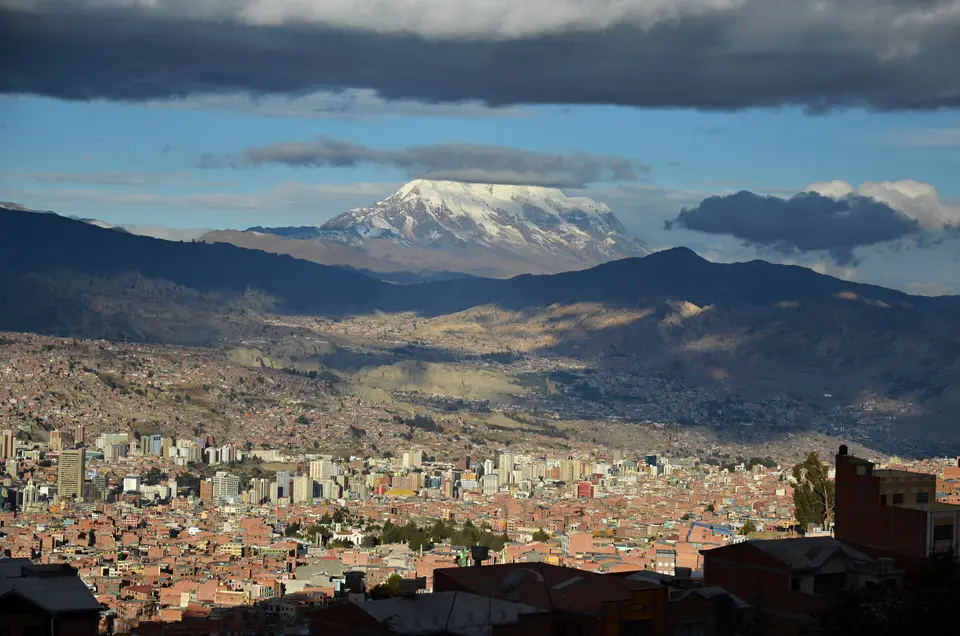
La Paz is the seat of Bolivia’s government and one of the highest major cities in the world, spilling down the walls of a deep canyon from the Altiplano plain. Spanish settlers founded it in 1548, and the city sits between roughly 3,200 and 4,100 metres above sea level, with the snowy summit of Illimani rising beyond. The city’s unusual geography has produced a unique public transport system, Mi Teleférico, a network of colour-coded cable cars that lifts commuters above traffic and gives visitors extraordinary views. Aymara culture is strong, visible in dress, language, markets and festivals. The Witches’ Market sells herbal remedies and ritual items, San Francisco Church stands at the heart of the old centre, and the nearby Valle de la Luna offers eroded badlands. Day trips reach Tiwanaku, a pre-Inca ceremonial site, and Lake Titicaca. The altitude is the main challenge. Many visitors feel headaches, breathlessness and fatigue, and health agencies advise ascending gradually, resting, drinking water, avoiding alcohol at first, and seeking medical help for severe symptoms. Flying directly into the airport at 4,000 metres is harder than arriving overland, so some travellers sleep at lower altitude first. Weather swings from sunny days to cold nights, so layers and sun protection are essential. Bolivia’s political and economic situation can change, and demonstrations occasionally disrupt travel, so check local news and official advice.
How to visit
Living high-altitude city. Altitude and occasional disruptions require planning.
- Gateway
- El Alto International Airport (LPB), at about 4,000 m. The airport sits higher than the city; plan acclimatisation.
- Getting there
- El Alto International Airport connects to the city by taxi or minibus. Mi Teleférico cable car lines link El Alto and La Paz neighbourhoods.
- Access and booking
- Most sights are free to wander; museums and archaeological sites charge admission.
- Season and conditions
- The dry season (May–October) has clear skies and cold nights; the rainy season runs from roughly December to March.
- Guides, permits and reservations
- Consider altitude health advice before travelling. Check Bolivia’s entry and vaccination rules for your nationality.
- Accessibility and physical demands
- Steep streets and altitude make walking tiring; cable cars help. Pending verification.
- What you can realistically visit today
- You can ride Mi Teleférico, explore the old centre and markets, visit Valle de la Luna and take day trips to Tiwanaku and Lake Titicaca.
Checked against official sources
- TravelHealthPro lists La Paz at about 3,630 m and El Alto at about 4,150 m, and advises avoiding sleeping elevation increases of more than 500 m per day and taking rest days; the CDC notes that travellers to places such as La Paz may sleep at lower altitude first. — TravelHealthPro (UK) / CDC Yellow Book
Reviewed 2026-10-23. Official details change; confirm on the official page before you travel.
Pending verification
SATRAM has not verified the following; please check an official source:
- Cable car operating hours and fares.
- Current political and transport disruptions.
Official and useful links
Sources
Description and visit notes were written by SATRAM from these references. “Opened” means a page was read during the review; “cited” means it is listed as a standard reference and its address has not been machine-checked. Last reviewed .
- New7Wonders Cities — official wonders page — New7Wonders Foundation · opened
- Bolivia — NaTHNaC / TravelHealthPro — UKHSA · opened
- High-altitude travel and altitude illness — US CDC · opened