
What a morning on the backwaters looks like
A descriptive guide to the rhythm of an Alappuzha morning — and how to make it a good one.
English By SATRAM Editorial · · 1 min read
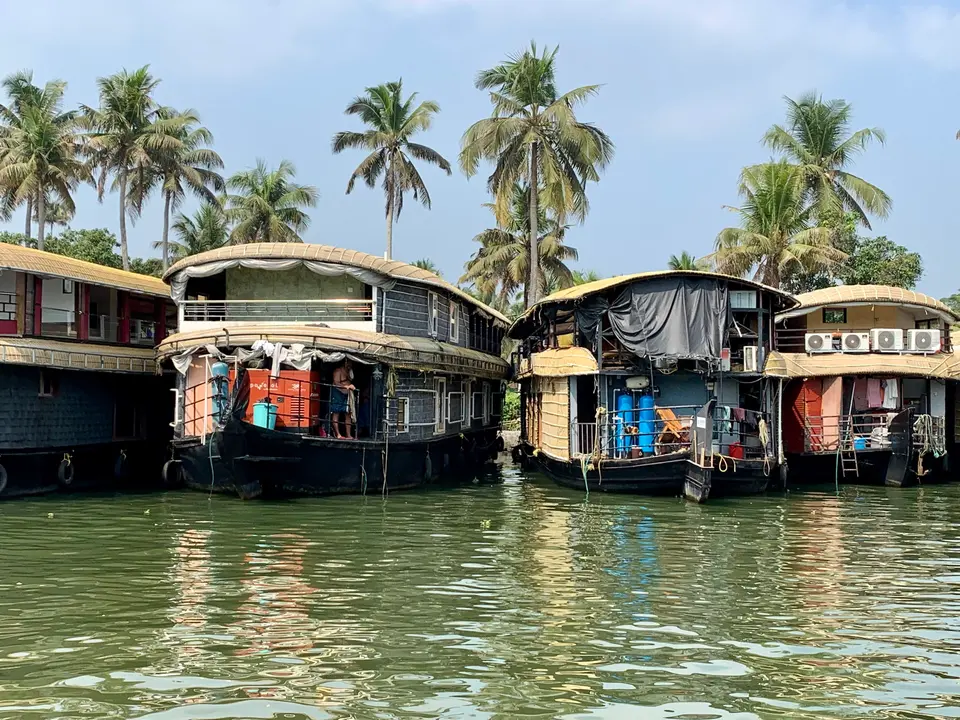
Before the sun is fully up, the backwaters are quiet except for birds. Kingfishers and egrets work the edges of the canals, and a thin mist sits on the water. Houseboats that have moored for the night start their stoves, and the smell of wood smoke, coconut and frying batter drifts across the water.
Along the banks, life continues. Women wash clothes and dishes at the steps leading to the water, children walk to school along narrow embankments, and men pole canoes loaded with coconuts or fish. The paddy fields of Kuttanad lie below the water level, held back by earth bunds, and in the early light they glow a fresh green.
A good morning comes from slowing down. If you are on a houseboat, ask to cruise before the day heats up, and agree in advance on the route and the stopping points. If you can, switch to a small canoe for an hour: it reaches canals that large boats cannot, and its silence lets you hear the village.
A few responsible habits help. Keep noise low, particularly near homes. Do not throw rubbish or leftover food into the water, and choose operators who treat waste properly. Ask before photographing people, and buy from local stalls rather than from boats that hustle.
By late morning the light has hardened and the heat has built. This is the time for lunch on board, served on a banana leaf, and a siesta while the boat drifts on. It is a very small, very human way of seeing a place, and it is one of the reasons travellers return to Kerala.