
Seven Wonders of the Underwater World
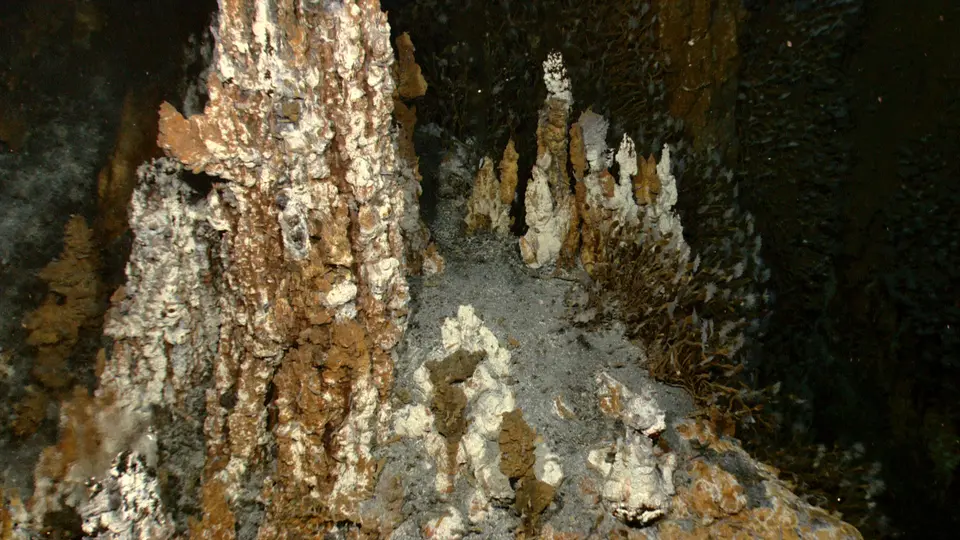
Hydrothermal vents are fissures on the seafloor where seawater, heated by magma below, erupts as mineral-rich fluid. The first vents were found in 1977 on the Galápagos Rift, in the Pacific roughly 330 kilometres north-east of the Galápagos Islands and some 2,500 metres below the surface, by scientists aboard the submersible Alvin. They were astonished to find dense communities of giant tube worms, clams and mussels living in total darkness. Instead of photosynthesis, the animals depended on bacteria that turn chemicals such as hydrogen sulphide into energy, a process called chemosynthesis that changed how we think about life. PADI’s list, compiled by CEDAM International, names this wonder only as deep sea vents in Ecuador; this profile uses the Galápagos Rift, the best-known vent area in the region, and the legal status of that seafloor, whether in Ecuador’s exclusive economic zone or international waters, has not been verified here. These are not recreational dive sites. The pressure is around two hundred and fifty times that at the surface, and the vents are visited only by crewed research submersibles and robotic vehicles. Accessible alternatives are rich: NOAA’s Okeanos Explorer broadcast live from the Galápagos Rift in 2011, and agencies such as NOAA, WHOI and the Smithsonian publish images and video online. For a hands-on experience of the region, snorkel or dive in the Galápagos Marine Reserve with licensed operators, and let the vents remain a story of scientific discovery.
How to visit
Research environment — no recreational access. Visited only by research submersibles and ROVs.
- Gateway
- None for recreational visitors. Nearest island gateways: Baltra or San Cristóbal, Galápagos (Ecuador). The vent fields lie hundreds of kilometres offshore and are reached only by research vessels and deep submersibles or remotely operated vehicles.
- Getting there
- There is no tourist transport to the vents. Research cruises depart from ports in the region; Baltra and San Cristóbal in the Galápagos are the nearest island gateways for your wider trip.
- Access and booking
- Not open to the public. Access requires scientific permits from the relevant governments and vessels with deep-diving capability.
- Season and conditions
- Not applicable for visitors; research cruises run at scheduled times.
- Guides, permits and reservations
- Recreational divers cannot reach these depths. For Galápagos travel, see the Galápagos Islands profile for park rules.
- Accessibility and physical demands
- Online media is the accessible route: videos, images and live-stream archives from research institutions.
- What you can realistically visit today
- You can watch archived video and images from expeditions, read research summaries and visit science museums. In the Galápagos, you can snorkel and dive shallow reefs in the marine reserve with licensed guides.
Checked against official sources
- PADI’s article lists the entry as “Deep Sea Vents, Ecuador” without naming a specific site; search of Woods Hole and other sources describes the 1977 Galápagos Rift discovery at about 2,500 m depth, roughly 330 km north-east of the Galápagos. — PADI / Woods Hole Oceanographic Institution
Reviewed 2026-10-23. Official details change; confirm on the official page before you travel.
Pending verification
SATRAM has not verified the following; please check an official source:
- Whether the Galápagos Rift vent fields lie within Ecuador’s exclusive economic zone or in international waters.
- Exact coordinates used in this profile are approximate.
Sources
Description and visit notes were written by SATRAM from these references. “Opened” means a page was read during the review; “cited” means it is listed as a standard reference and its address has not been machine-checked. Last reviewed .
- Seven Wonders of the Underwater World — PADI — PADI · opened
- 1977 — Astounding Discoveries (history of hydrothermal vents) — Woods Hole Oceanographic Institution · cited
- NOAA Ocean Exploration — NOAA · cited