
Seven Wonders of the Underwater World
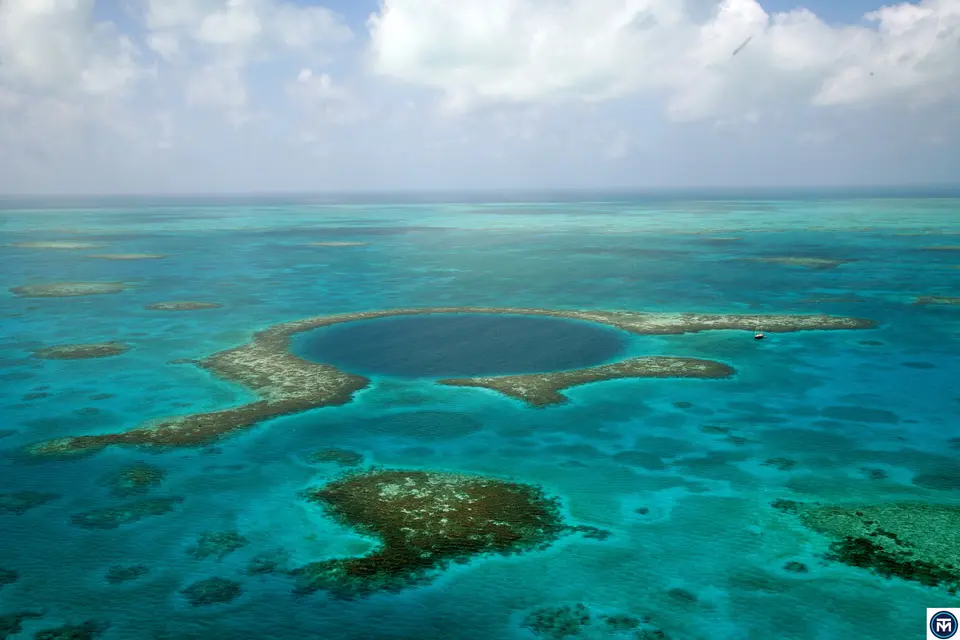
The Belize Barrier Reef runs for roughly three hundred kilometres along the country’s Caribbean coast, part of the Mesoamerican Reef and one of the largest reef systems in the Western Hemisphere. UNESCO’s Belize Barrier Reef Reserve System includes seven protected sites: marine reserves, cayes, atolls and the Blue Hole Natural Monument. Between the reef and the coast lies a lagoon dotted with mangrove islands, seagrass meadows and sandy cayes, a nursery for fish, turtles and manatees. The Great Blue Hole, on Lighthouse Reef, is a nearly circular marine sinkhole about 300 metres across and over a hundred metres deep, a former cave that flooded as sea level rose. Jacques Cousteau explored it in 1971 and brought it to global attention. Divers descend along its edge to see giant stalactites at depth, a demanding dive suited to experienced, certified divers with a licensed operator. Others snorkel at Hol Chan Marine Reserve, swim with nurse sharks and rays near Caye Caulker and Ambergris Caye, or travel to Glover’s Reef and Half Moon Caye, where seabirds nest. The reef system was placed on UNESCO’s danger list in 2009 and removed in 2018 after Belize introduced stronger protections, including a moratorium on offshore oil exploration. Reef health still faces pressures from warming seas and coastal development. Choose operators that follow mooring, no-touch and waste practices, and consider the many shallow and surface experiences that do not require deep diving.
How to visit
Protected reef system. Marine reserves with varied rules.
- Gateway
- Belize City (BZE), then water taxi or flight to the cayes. Caye Caulker and Ambergris Caye are common bases; Lighthouse Reef and the Blue Hole are reached by long boat trips or air tours.
- Getting there
- Fly to Belize City; take a water taxi or short flight to Caye Caulker or San Pedro (Ambergris Caye). The Blue Hole is a long day trip by boat from the mainland or cayes, or an air tour, or a liveaboard.
- Access and booking
- Book through licensed dive and snorkel operators; Belize’s tourism board states the Blue Hole and other reserves are visited with sustainable licensed operators.
- Season and conditions
- Dry season (roughly December–May) offers calmer seas; hurricane season runs June–November.
- Guides, permits and reservations
- Diving the Great Blue Hole requires suitable certification and a safety screening form with operators. Reef conservation rules apply.
- Accessibility and physical demands
- Boat boarding and ladders require some mobility; many operators can advise. Pending verification.
- What you can realistically visit today
- You can snorkel in Hol Chan, dive at various sites, take air tours over the Blue Hole and visit Half Moon Caye, subject to weather and operator schedules.
Checked against official sources
- Belize Audubon states that the Blue Hole Natural Monument includes no land and no facilities other than mooring buoys, and Travel Belize says the Blue Hole can be visited by day dive-boat trip, liveaboard or air tour with licensed operators; the Belize Tourism Board’s scuba standards require a safety screening form for Blue Hole divers. — Belize Audubon Society / Travel Belize / Belize Tourism Board
Reviewed 2026-10-23. Official details change; confirm on the official page before you travel.
Pending verification
SATRAM has not verified the following; please check an official source:
- Any visitor fee at the Blue Hole Natural Monument.
- Current Belize Tourism Board dive rules.
Official and useful links
Sources
Description and visit notes were written by SATRAM from these references. “Opened” means a page was read during the review; “cited” means it is listed as a standard reference and its address has not been machine-checked. Last reviewed .
- Seven Wonders of the Underwater World — PADI — PADI · opened
- Belize Barrier Reef Reserve System — UNESCO World Heritage List — UNESCO World Heritage Centre · cited
- The Great Blue Hole — Travel Belize — Belize Tourism Board · opened
- Blue Hole Natural Monument — Belize Audubon Society — Belize Audubon Society · opened