
New 7 Wonders of Nature
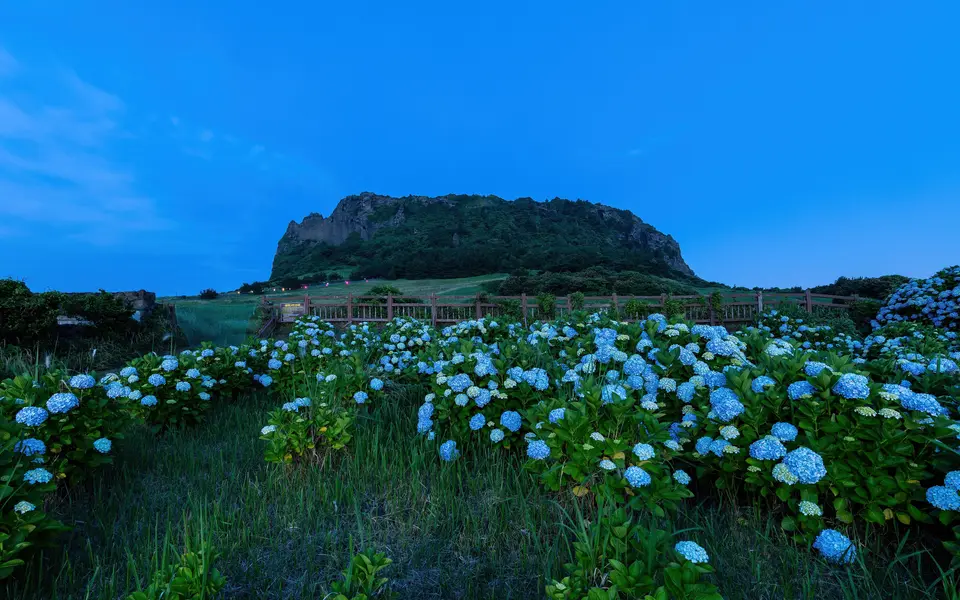
Jeju is a volcanic island formed by eruptions over roughly the last two million years, dominated by Hallasan, South Korea’s highest mountain at 1,947 metres, with a crater lake near its summit. Around it, hundreds of small parasitic cones called oreum dot the land, black basalt walls divide fields, and cliffs and beaches ring the coast. UNESCO inscribed three areas as Jeju Volcanic Island and Lava Tubes: the Hallasan Natural Reserve, the Geomunoreum lava tube system and Seongsan Ilchulbong, a tuff cone that rises from the sea on the eastern tip and is famous for sunrises. The island is also known for its culture. The haenyeo, women who dive without breathing equipment to gather seafood, are recognised by UNESCO as intangible heritage, and local lore speaks of three abundances: stones, wind and women. Subtropical weather supports tangerine orchards, camellia forests and rapeseed fields in spring, while coastal paths such as the Olle trails offer gentle walking. Visitors can climb Hallasan, but summit routes require advance reservations and are closed or restricted at times, while shorter trails are available without booking. The south coast has waterfalls and sea cliffs, and the east has Seongsan Ilchulbong, where the summit trail takes about half an hour and is free of reservation. Jeju is popular with domestic holidaymakers, so book accommodation and car hire early, and check weather before ferry or mountain plans.
How to visit
Protected volcanic landscape. Parts are a UNESCO World Heritage Site, biosphere reserve and geopark.
- Gateway
- Jeju International Airport (CJU). Flights from Seoul take about an hour; ferries also serve the island.
- Getting there
- Fly to Jeju International Airport; buses, taxis and rental cars connect the island. Seongsan Ilchulbong is roughly one to one and a half hours from the airport by public transport.
- Access and booking
- Seongsan Ilchulbong’s summit trail is ticketed and does not require a reservation. Hallasan summit routes (Seongpanak and Gwaneumsa) require advance reservation through the national park’s online system; other trails do not.
- Season and conditions
- Spring and autumn are most comfortable; winter brings snow on Hallasan and strong winds; summer has a rainy season.
- Guides, permits and reservations
- Reservations are needed for Hallasan summit hikes. Check trail closures and maintenance windows.
- Accessibility and physical demands
- Coastal paths are accessible in places; summit climbs are demanding. Pending verification.
- What you can realistically visit today
- You can hike Hallasan routes, climb Seongsan Ilchulbong, explore lava tubes and coastal walks, and watch haenyeo demonstrations in some places.
Checked against official sources
- Visit Jeju and VisitKorea state that Seongsan Ilchulbong needs no advance reservation, the summit climb takes about 30–40 minutes, and Hallasan summit trails (Seongpanak and Gwaneumsa) require advance reservation via the official system, with other trails open without booking. — Visit Jeju / VisitKorea
Reviewed 2026-10-23. Official details change; confirm on the official page before you travel.
Pending verification
SATRAM has not verified the following; please check an official source:
- Current admission price and opening hours at Seongsan Ilchulbong.
- Daily quotas and current closures on Hallasan trails.
Official and useful links
Sources
Description and visit notes were written by SATRAM from these references. “Opened” means a page was read during the review; “cited” means it is listed as a standard reference and its address has not been machine-checked. Last reviewed .
- New7Wonders of Nature — official wonders page — New7Wonders Foundation · opened
- Jeju Volcanic Island and Lava Tubes — UNESCO World Heritage List — UNESCO World Heritage Centre · cited
- Seongsan Ilchulbong — Visit Jeju — Jeju Tourism Organization · opened