When and where
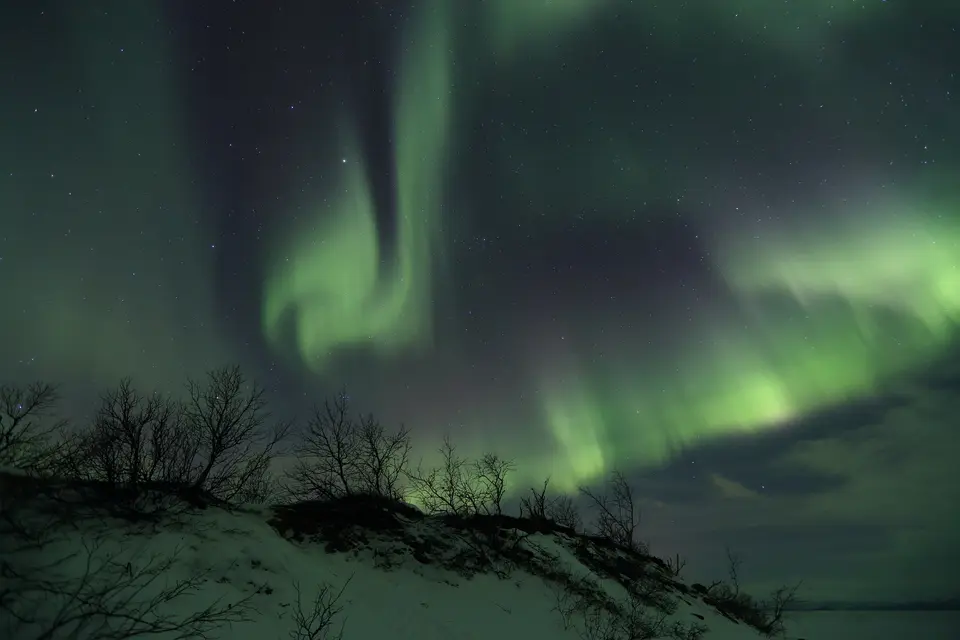
The aurora is most often seen in a ring around the geomagnetic poles. In the northern hemisphere that means northern Norway, Sweden, Finland, Iceland, Greenland, Canada and Alaska. The season of dark nights runs roughly from September to early April; in midsummer the sky is too bright. Clear, dark nights away from city lights matter more than the exact date.
Reading the forecast
Space-weather agencies publish aurora forecasts and a planetary K-index (Kp) that describes geomagnetic activity. Higher numbers mean the aurora may be visible further from the poles, but even a low Kp can give a good display in the far north. Combine the aurora forecast with a local cloud forecast. Treat both as odds, not promises.
Plan for several nights
Because clouds and quiet nights are common, plan at least three to five nights in one region and keep evenings free. Guided trips that drive to clearer skies increase your chances but still cannot guarantee a display. Dress for deep cold: thermal base layers, insulated boots and warm gloves.
Photography
Use a tripod, a wide lens and manual focus, and start with a high ISO and exposures of a few seconds. Our aurora photography guide has a starting recipe. Keep spare batteries warm and look up from the screen from time to time.
Safety and respect
Do not walk onto frozen lakes or rivers without local knowledge, avoid driving on icy roads at night in unfamiliar areas, and respect private land and Sámi communities in the Arctic.
Places SATRAM suggests
- Tromsø — Arctic Norway — A small Arctic city beneath the auroral oval, with fjords, whales and polar-night light.
- Iceland — South Coast and Reykjavík — Waterfalls, black-sand beaches, glaciers and, in winter, the northern lights.