
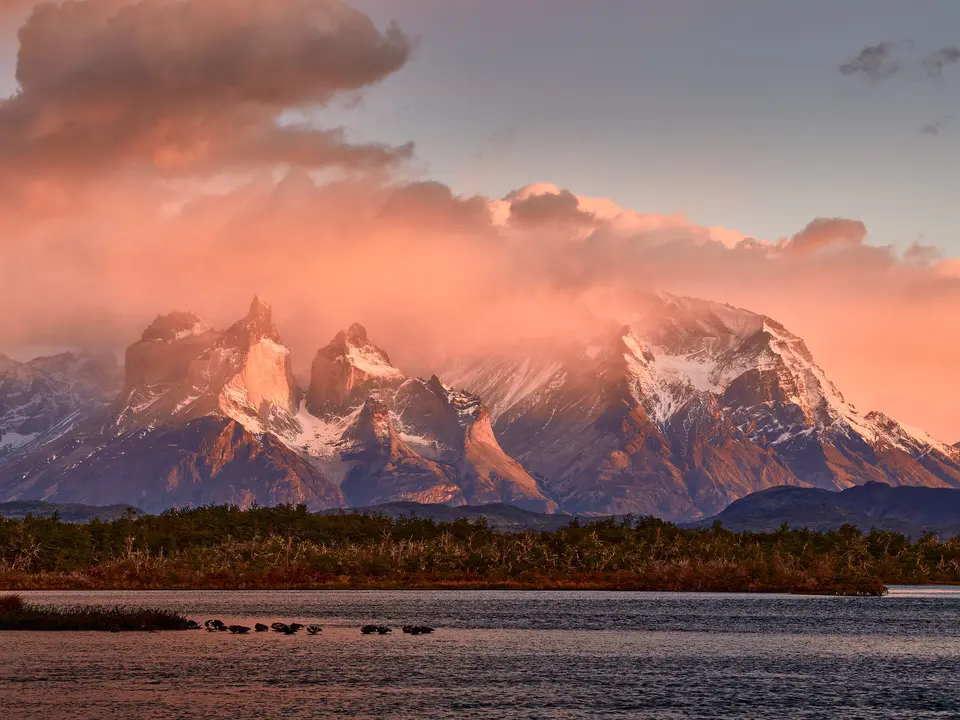
Overview
Torres del Paine combines the three granite towers that give the park its name, the horn-shaped Cuernos, turquoise lakes, glaciers and open steppe where guanacos graze. Multi-day treks such as the W and the O circuit are world-famous, with refugios and campsites that must be booked in advance.
Weather is wild and can change within minutes; strong wind is common. Day visitors can see viewpoints by road and short walks, while trekkers need serious preparation and reservations through the official concessionaires.
Best time to visit
November to March is the southern summer, with the longest days and most open services; wind is strongest in summer. April and October are quieter but with colder weather and limited facilities.
Getting there and around
Fly to Punta Arenas (PUQ) or Puerto Natales (PNT), then travel about 2–3 hours by road to the park. Buses run from Puerto Natales; many visitors join tours or rent a car.
Sample three-day itinerary
- Day 1 — Gateway. Arrive in Puerto Natales, collect permits and gear, and confirm weather.
- Day 2 — Viewpoints. Drive into the park and see Lago Grey, Salto Grande and viewpoints of the Cuernos.
- Day 3 — Towers. Hike to the base of the Torres (a long day hike) if conditions allow, or choose a lower-level walk.
A sample, not a booking. Opening hours, transport and seasonal closures change; confirm with official sources.
Indicative budget
Premium Premium. Park fees, refugio bookings, guides and transport in Patagonia are costly; camping and self-catering reduce costs.
No live prices, weather, visa eligibility or availability are shown. Use the budget calculator for your own estimate.
Attractions
- Base of the Towers. A demanding day hike to a glacial lake beneath the spires.
- Lago Grey and glacier. Icebergs and a viewpoint over Grey Glacier.
- Salto Grande. A waterfall and viewpoint of the Cuernos.
- Guanaco and condor viewing. Wildlife along park roads.
Packing guidance
- Windproof and waterproof layers
- Warm hat and gloves even in summer
- Broken-in hiking boots
- Trekking poles
- Dry bags and a reusable water bottle
Gallery
Reviewed 2026-10-23. SATRAM’s notes are editorial guidance written from public references, not live travel information.